
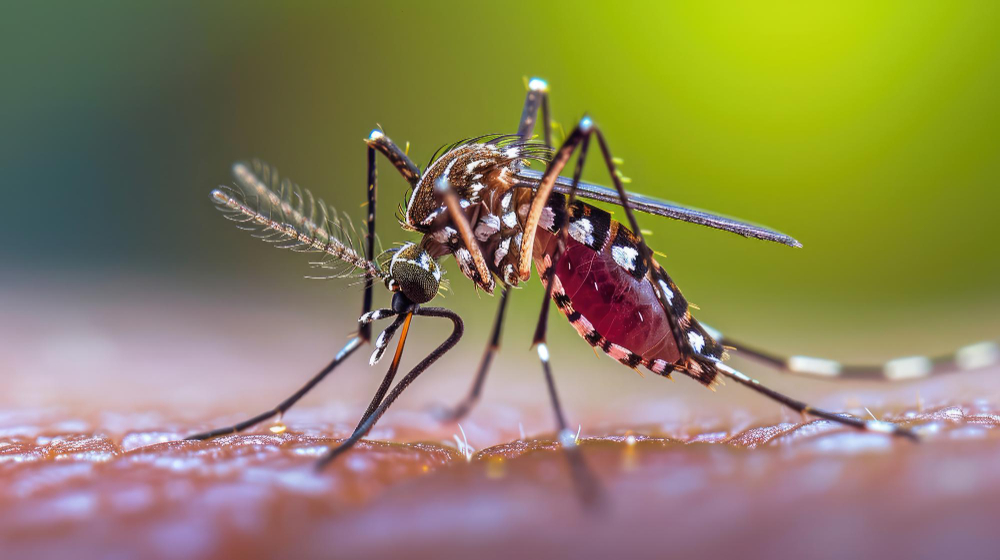
As Asean Dengue Day arrives this 15 June, the regional rallying cry is “Towards Zero Dengue Deaths: Science, Strategy, and Solidarity.”
Yet in Malaysia, we remain dangerously off-pace to meet that vision. The nation knows the rhythm of dengue all too well. Every few years, like clockwork, a major outbreak surges across the country.
This cyclical pattern, a three-to-four-year cycle of escalating cases, is not merely bad luck; it is a predictable phenomenon now worsened by the climate-disrupting El Niño.
These warm, dry conditions create ideal breeding grounds for the Aedes mosquito, supercharging transmission and overwhelming our healthcare system.
We are seeing this play out once more. National data shows that cases in January-June 2026 number 30,311, an increase of 9.7% from 27,640 cases during the same period in 2025. Mortality for the first half of this year was 23, an increase of 35% from 17 in 2025.
While Selangor reported a decline in 2025 compared to the catastrophic previous year, the threat has not vanished. As of June 7, 2026, Selangor has recorded 14,502 dengue cases, accounting for 47% of the national dengue burden. Thirteen lives have been lost, which is a 6.5-fold increase compared to the same period last year. The state is now home to 286 of Malaysia’s 442 dengue hotspots, or 65% of the total.
Every death — every hospitalisation — is an urgent reminder that the traditional tools of fogging and clean-up campaigns, while essential, are insufficient.
This is why the continued resistance to mainstreaming the dengue vaccine, Qdenga, is a profound public health misstep.
Of course, no discussion of dengue vaccination in 2026 would be complete without addressing the recent headlines from Brazil. On 8 June, just one week before Asean Dengue Day, Brazil’s health authorities suspended the use of a different dengue vaccine candidate, Butantan-DV, following 42 severe adverse events and two possible associated deaths.
The suspension was precautionary, and investigators have yet to establish a causal link. But already, opponents of vaccination in Malaysia have seized on the news, warning of “unproven risks.” This is a classic case of guilt by association. Butantan-DV is a single-dose, live-attenuated vaccine developed by a Brazilian institute; it is not Qdenga.
Crucially, Brazil itself has not halted the use of Qdenga. The country’s National Immunisation Programme (NIP) continues to administer Qdenga to children and adolescents without interruption, with over 7.4 million doses already delivered.
In fact, Brazil has purchased nine million doses of Qdenga for 2026 and plans to buy another nine million for 2027. That is the clearest possible vote of confidence from a nation that has suffered more than any other from dengue’s toll.
So let us be unequivocal: Qdenga is safe, and the evidence is overwhelming. The landmark TIDES trial, involving more than 20,000 participants, confirmed no new safety signals after seven years of follow-up. Against hospitalisation, Qdenga offers 84% protection at 4.5 years, rising to over 90% after a booster. It is approved in 42 countries, from Indonesia to the European Union, and prequalified by the WHO.
The Butantan suspension is a reminder that science requires vigilance — but it is not a reason to reject a proven tool. If Malaysia’s Health Ministry truly believes in evidence-based policy, it must distinguish between a precautionary pause on one newly introduced vaccine and the continued, successful rollout of another. To conflate the two is either ignorance or wilful misdirection. The public deserves better.
Latin America provides a powerful blueprint for success. Facing a devastating epidemic in 2024 that claimed over 6,000 lives, Brazil integrated Qdenga into its NIP. Long-term trial data confirmed the vaccine’s sustained protection across all four virus serotypes for at least seven years. The evidence is no longer theoretical; it is a proven, life-saving intervention.
Despite Malaysia granting conditional approval for Qdenga in February 2024, the public remains tragically unprimed for its adoption. Nearly two years after its launch, awareness of the vaccine is still critically low. Experts point to a lack of effective public education campaign, much focused on traditional vector control measures.
Worse, the Health Ministry has stated it has “no plans” to include the vaccine in the NIP, arguing Malaysia does not meet the WHO threshold of 60% seroprevalence in children.
This is a dangerously narrow interpretation. Waiting passively for herd immunity to materialise through infection is unethical and unsustainable, especially when we have a safe, effective tool that can prevent severe disease and death now.
On this Asean Dengue Day, we must realign the narrative. We cannot afford to treat this vaccine as a niche product for the informed few and the rich.
The Health Ministry must immediately launch a holistic mass public awareness campaign and negotiate with the manufacturer to make the vaccine affordable and accessible, particularly in hotspot states like Selangor.
Relying solely on Wolbachia-infected mosquitoes or behaviour-change campaigns is no longer enough.
The science is clear, the Latin American success stories are a beacon, and the cyclical crisis is at our doorstep. Let us use all the tools in our arsenal. The goal of zero dengue deaths is achievable — but only if we have the strategy and solidarity to act.
Dr Zulkifli Ismail is chairman of Dengue Prevention Advocacy Malaysia (DPAM). Dr Musa Mohd Nordin and Dr Koh Kar Chai are members of DPAM.
Published in The Edge Malaysia: https://theedgemalaysia.com/node/806726
